
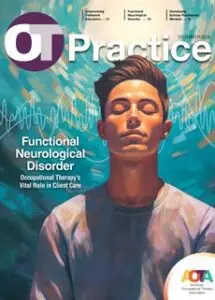
Functional Neurological Disorder
Occupational Therapy's Vital Role in Client Care
Jason Kreuzman and Debi Hinerfeld
AOTA (2024)
- Emotional, Occupational, Pediatric
- Clinical Study, Research Translation
Key takeaways
- Occupational therapy is crucial for people with Functional Neurological Disorder (FND) as it addresses both physical and mental health aspects.
- Consistent education and communication from healthcare providers help FND patients accept their diagnosis and initiate healing.
- Occupational therapy focuses on functional task engagement and self-management to promote independence and confidence in daily activities.
- Strategies like pacing, grounding, imagery, and attention redirection can help manage FND symptoms effectively.
- More research is needed to highlight the unique contributions of occupational therapists in FND care.
Click to read full summary
Overview
This summary explores the vital role of occupational therapy in the care of individuals with Functional Neurological Disorder (FND). The study focuses on how occupational therapists contribute significantly to the multidisciplinary treatment of FND, which affects movement and sensory functions without a recognizable neurological cause.
Discussion
The study analyzed the role of occupational therapy in treating FND, involving multiple patients with varied symptoms and backgrounds.
- Participants included teenagers with FND, demonstrating a range of symptoms.
- The study highlighted the importance of a multidisciplinary approach, involving occupational therapists, physical therapists, and psychologists.
- Interventions focused on educating patients and promoting engagement in daily tasks—like school or work—to boost independence.
- Outcomes showed significant improvements in patients’ abilities to manage symptoms and perform daily activities.
- Limitations included the need for more comprehensive research to fully understand occupational therapy’s impact on FND.
Next Steps
If you have FND, here are some steps you can consider:
- Engage in occupational therapy to learn practical strategies for managing your symptoms.
- Discuss consistent approaches and therapy plans with healthcare providers to ensure clear communication and understanding.
- Track your symptoms to see what strategies work best for you and adjust accordingly with your therapist.
- Connect with others in the FND community for support and shared experiences.
- Stay hopeful and informed about new research developments in the treatment of FND.
Reference
Kreuzman, J., & Hinerfeld, D. Functional neurological disorder: Occupational therapy’s vital role in client care. AOTA. (2024). OT Practice, Dec 2024.
This summary is provided for informational purposes only and does not constitute medical, financial, or legal advice. It is not intended to replace professional consultation or treatment. Always consult qualified providers regarding your specific circumstances, symptoms, or questions.