
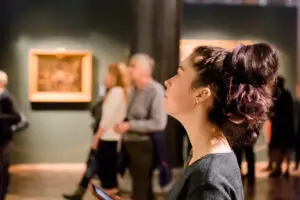
Creating a Sensory-Friendly Environment
Making Museums—and Everyday Spaces—Comfortable for Sensitive Nervous Systems
Guggenheim for All Toolkit
Solomon R. Guggenheim Museum (2023)
- Environmental, Occupational
- Complementary Approach, Premium Content, Professional Insight
Key Takeaways
- The environment is medicine. Thoughtful lighting, sound control, clear signage, and quiet “sensory havens” can prevent overstimulation and lower stress for people whose nervous systems already work overtime—common in FND.
- Universal design helps everyone. Changes made for the most sensory-sensitive visitors (e.g., warm LEDs, paper towels instead of jet dryers) improve comfort for all.
- Care Partner compassion is a game-changer. A calm voice, unhurried instructions, and a readiness to guide someone to a quiet spot often matter more than high-tech fixes.
- Communicate before you arrive. Published sensory details (noise levels, flashing lights, cold rooms) let visitors bring headphones, layers, or exit plans—turning uncertainty into confidence.
Click to read full summary
The Essentials
This toolkit distills evidence-informed strategies museums use to reduce unpleasant sensory input—bright glare, echoing halls, unexpected touch. It explains the eight sensory systems (beyond the usual five) and shows how lighting, acoustics, pathways, restrooms, and even gift-shops can trigger—or calm—the nervous system. Real-world vignettes (“Mario” the sensory-sensitive art lover; “Anna” the tactile-seeking artist) illustrate the spectrum of needs.
For the FND community, the guide reads like a blueprint for everyday life. Many people with FND experience sensory hypersensitivity, dizziness, fatigue, or functional seizures set off by visual flicker or sudden noise. The toolkit’s checklists—diffuse natural light, dimmers, HEPA-filtered hand dryers, clearly marked quiet rooms—translate directly to home, workplace, or classroom adaptations.
Why This Matters for FND
FND symptoms often flare when the nervous system is overloaded. Creating or requesting sensory-friendly conditions can reduce triggers for functional seizures, motor episodes, dizziness, and cognitive “fog,” giving the brain a chance to reset. The guide’s practical, low-cost recommendations align with Fit + Function’s whole-person approach, empowering users to shape environments that support regulation and recovery.
Resource Qualities
Applicability:
Accessibility:
Evidence-Based:
Practical Value:
Practical Applications
For Individuals with FND
Low-Energy Days
- Keep a “sensory go-bag”: warm hat, soft-glow clip-on light, earplugs, and sunglasses for instant relief in harsh spaces.
Building Long-Term Wellness
- Map your daily routes (work, clinic, grocery) and identify at least one “sensory haven” per location—quiet stairwell, dim lounge, car with music off.
For Care Partners
Supporting Your Loved One
- Before outings, call venues to ask about lighting, peak crowd times, and availability of quiet rooms; share the info in a simple plan.
Caring For Yourself
- Adopt the same environmental tweaks at home (warmer bulbs, reduced clutter) to create a calmer shared space that lowers everyone’s stress load.
When This is Most Helpful
- Newly diagnosed: introduces the sensory-stress link in plain language.
- During flare periods: quick reference for modifying surroundings to reduce triggers.
- Care-partner onboarding: concrete steps for advocating in public venues.
This summary is provided for informational purposes only and does not constitute medical, financial, or legal advice. It is not intended to replace professional consultation or treatment. Always consult qualified providers regarding your specific circumstances, symptoms, or questions.