
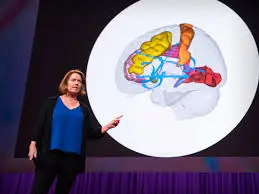
How to Hack Your Brain When You’re in Pain
Dr. Amy Baxter
TED.com (2023)
- Physical
- Premium Content, Resource Summary, Video
Key Takeaways
- Pain is a brain event, not just a body event. When injury fades but pain persists, neural pathways can keep “broadcasting” discomfort on a loop.
- Distraction, vibration & cold form a pain‑blocking trio. Engaging your attention elsewhere, adding gentle vibration, and applying cold compete with pain signals in the spinal cord and cortex.
- Layering techniques amplifies relief. Using two or three hacks together (e.g., ice + vibration + mental counting) dampens pain more than any single method.
- Control fosters calm. Quick, drug‑free tools let people with FND experiment and regain a sense of agency over unpredictable flares.
Click to read full summary
The Essentials
Dr Amy Baxter, a pediatric emergency physician turned pain‑science innovator, distills decades of research into one core idea: pain perception is highly modifiable. Instead of focusing solely on pills or structural fixes, she shows how the brain’s limited “bandwidth” can be hijacked using competing sensations and intense attention shifts.
TED
Her talk walks viewers through the neuroscience of the gate‑control theory and demonstrates three low‑tech interventions—distraction, vibration, and cold—that anyone can try at home or in clinic. Because the methods are inexpensive, portable, and fast‑acting, they translate well beyond acute needle sticks to chronic conditions, including FND, migraine, and fibromyalgia.
Why This Matters for FND
Many people with Functional Neurological Disorder experience genuine pain without visible tissue damage. That “invisible” nature can worsen distress and reinforce the pain loop. Baxter’s hacks target the same neural gates that mis‑fire in FND, offering a tangible way to interrupt spirals of sensation → worry → heightened sensation. The techniques also respect fluctuating energy levels: they can be done sitting, lying down, or even during a seizure recovery window.
Resource Qualities
Applicability:
Accessibility:
Evidence-Based:
Practical Value:
Practical Applications
Individuals with FND
Low-Energy Days
- Keep a reusable gel pack in your bedside kit. When a flare starts, place the pack on the painful area and mentally spell your name backwards—an easy distraction even when fatigued.
Building Long‑Term Wellness
- Pair a five‑minute morning stretch with brief vibration (e.g., an electric toothbrush head) at common trigger points to pre‑empt daily discomfort.
Care Partners
Supporting a Loved One
- Offer to start a 30‑second “I‑Spy” game or count ceiling tiles together while applying a cold pack—no extra equipment needed.
- Learn the right vibration frequency (around 80–120 Hz) and help your loved one test small devices so they can build a personalized relief routine.
Building Your Own Long‑Term Wellness
- Use the same trio on your own tension knots; modeling the behavior normalizes the practice and reduces caregiver strain.
- Schedule a weekly review to adjust tools that worked and celebrate small wins, reinforcing mutual agency.
When This Is Most Helpful
- Early after diagnosis, to introduce the idea that symptoms are real and modifiable.
- During unpredictable pain spikes when quick relief boosts confidence.
- While tapering pain medication or exploring non‑opioid options with a clinician.
Related Resources
- Original Video: “How to Hack Your Brain When You’re In Pain”. Ted.com – Watch Now
- Website: Retrain Pain is a global network of healthcare professionals, researchers, and patient partners working together to improve pain care through collaboration, education, and research. Explore More
- Book: “Why Do I Hurt?: A Patient Book About The Neuroscience Of Pain” by Adriaan Louw PT PhD – Find it on Amazon
Accessibility note: A transcript of the original TED Talk and an audio‑only version are available at TED.com. Captions can be toggled on YouTube.
This summary is provided for informational purposes only and does not constitute medical, financial, or legal advice. It is not intended to replace professional consultation or treatment. Always consult qualified healthcare providers regarding your specific circumstances, symptoms, or questions.