
Low‑Cost, Sensory‑Friendly Home Modifications
A Scientific Study Synthesis
James Hopper
Fit + Function (2025)
- Environmental
- Daily Living Strategy, Research Translation
Key Takeaways
- Three budget-friendly pillars: dimmable, flicker-free lighting; sound-reduction tactics; and clear, compartmentalized spaces are consistently linked to less sensory overload.
- DIY and under $500: most recommended upgrades—LED bulbs, rugs, acoustic panels, decluttering—require no professional help and can be tackled a step at a time.
- Meaningful impact: studies report fewer flareups, easier daily routines, and better task participation after simple lighting and noise tweaks.
- Care-partner approved: caregivers rated modular “calm corners,” refuge seats, and visual schedules as highly useful and safe, confirming real-world practicality.
Click to read full summary
The Essentials
This rapid review sifted 50 academic papers and screened in nine high-relevance studies—mostly qualitative or mixed-methods focused on children and adults with autism—to answer one question: Which low-cost home changes ease sensory stress? Visual, acoustic, and spatial adjustments topped every list. Researchers highlighted dimmable LEDs over harsh fluorescents, sound-absorbing materials (rugs, cork boards, soft furnishings), and clearly defined retreat spaces as the simplest, most effective fixes. Many adaptations could be done for under $500 and maintained by families themselves.
Evidence quality is moderate: benefits are mainly self- or caregiver-reported, and sample sizes are small, yet the consistency across studies lends weight. Implementation notes stress adaptability—start small, personalise, and iterate.
Why This Matters for FND
Sensory hypersensitivity and fatigue flares are common in Functional Neurological Disorder. Environments that bombard the nervous system can trigger or worsen symptoms. The modifications distilled in this report directly target light, sound, and spatial overstimulation, giving you low-energy, high-return tools to calm your threat response without waiting for a clinic visit.
Practical Applications
For Individuals with FND
Low-Energy Days
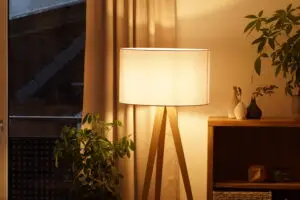
- Swap one bulb in a high-traffic room for a warm-white (≤2700 K) dimmable LED and turn on your white-noise machine—instant relief with minimal effort.
Building Long-Term Wellness
- Use Fit + Function’s free Sensory-Friendly Home Checklist to tackle one zone per week—start with decluttering a bedside table, then layer in acoustic rugs and blackout curtains.
For Care Partners
Supporting Your Loved One
- Create a “calm corner” with a comfy chair, small lamp, and fidgets. Encourage its use during symptom spikes to shorten recovery time.
For Your Well-Being
- Adopt the same lighting and noise adjustments in your own workspace to reduce compassion-fatigue and sensory drain.
When This is Most Helpful
- Right after diagnosis, when the home may feel overwhelming.
- During periods of heightened sensory sensitivity or fatigue.
- When care partners need quick, affordable ways to help without adding to their workload.
References
- Ceridwen Owen, D. McCann (2013). Picturing home: self-directed photography as a lens to explore the home environment in the care of children with Autism Spectrum Disorder
- Lukas Wohofsky, A. Marzi, F. Bettarello, L. Zaniboni, S. Lattacher, and 7 more (2023). Requirements of a Supportive Environment for People on the Autism Spectrum: A Human-Centered Design Story. Applied Sciences
- Wasan Nagib, Allison M. Williams (2017). Toward an autism-friendly home environment
- Wasan Nagib, Allison M. Williams (2018). Creating “therapeutic landscapes” at home: The experiences of families of children with autism. Health and Place
- Leah I. Stein, José Polido, S. Cermak (2012). Oral care and sensory concerns in autism. American Journal of Occupational Therapy
- Beth Pfeiffer, W. Coster, Gretchen Snethen, Maggie Derstine, Aimee Piller, and 1 more (2017). Caregivers’ Perspectives on the Sensory Environment and Participation in Daily Activities of Children With Autism Spectrum Disorder. American Journal of Occupational Therapy
- Melissa H. Black, Sarah McGarry, L. Churchill, Emily D’arcy, Julia Dalgleish, and 6 more (2022). Considerations of the built environment for autistic individuals: A review of the literature. Autism
- B. Hutchings, Richard V. Olsen, Heather J. Moulton (2008). Environmental Evaluations and Modifications to Support Aging at Home With a Developmental Disability
- J. Davidson (2010). ‘It cuts both ways’: a relational approach to access and accommodation for autism. Social Science & Medicine (1967)
This summary is provided for informational purposes only and does not constitute medical, financial, or legal advice. It is not intended to replace professional consultation or treatment. Always consult qualified providers regarding your specific circumstances, symptoms, or questions.